


Summary
- UK employers now have a positive legal duty to take reasonable steps to prevent sexual harassment before it occurs, not just respond after complaints.
- The duty extends to risks involving third parties, such as customers or contractors, requiring proactive risk management.
- If employers breach this duty, employment tribunals can increase compensation by up to 25% and regulators may take enforcement action.
- This is a guide for UK business owners on new sexual harassment obligations, prepared by LegalVision, a commercial law firm.
- LegalVision specialises in advising clients on employment law and workplace compliance.
Tips for Businesses
Update policies to reflect the preventative duty, train staff regularly, and assess workplace risks. Implement clear reporting systems and address complaints promptly. Monitor compliance and review procedures frequently to ensure reasonable steps are evidenced and effective.


New sexual harassment laws place a positive duty on employers to prevent harassment before it happens. Employers must take proactive, reasonable steps to protect staff, including from third parties such as clients or customers. This article explains the new legal obligations on employers, how the law is changing, and what practical steps businesses should take to remain compliant.
What Is Sexual Harassment?
Sexual harassment is any unwanted physical, verbal or non-verbal conduct of a sexual nature that violates someone’s dignity or creates an environment that is:
- intimidating;
- hostile;
- degrading;
- humiliating; or
- offensive.
Some examples of things that could be considered sexual harassment include:
- making inappropriate sexual comments or jokes;
- unwanted physical contact like touching, hugging or kissing;
- staring or making offensive gestures of a sexual nature;
- asking inappropriate questions about someone’s sex life; and
- displaying pornographic or sexually offensive material.
What Is the Current Legal Position?
Deriving from the Equality Act 2010, sexual harassment is against the law and is considered a form of unlawful discrimination. As an employer, you are responsible for ensuring your staff members do not engage in any form of sexual harassment. This responsibility extends beyond just the physical workplace. You can be held liable if sexual harassment from one of your employees occurs in work-related settings and situations outside the office environment.
This includes instances such as:
- company social events and gatherings;
- business trips and off-site meetings; and
- communications on social media relating to work.
Call 0808 196 8584 for urgent assistance.
Otherwise, complete this form, and we will contact you on the same business day.
What Changes Are Due to Come Into Force?
The existing obligations will be extended from October 2024. These updated obligations will require employers to take ‘reasonable steps’ to prevent sexual harassment in the workplace.
This means that you will now need to demonstrate that you are proactively taking preventative steps to prevent sexual harassment from occurring in the workplace.
Should an incident occur and if a matter progresses to an employment tribunal where it is found that you did not take proactive reasonable steps, the tribunal may impose an additional 25% uplift on any compensatory award to reflect this failure.
What Steps Can You Take to Ensure That You Are Remaining Compliant With the Law?
With the additional obligations due to come into effect in the latter half of the year, you will need to demonstrate the ‘reasonable steps’ that you have taken to prevent sexual harassment in the workplace. Some examples of ‘reasonable steps’ are outlined below.
Registers
You should ensure that your business has a reporting register that highlights incidents, the actions taken, and the next steps. This is an efficient way of monitoring a situation and also reviewing your company’s approach when it occurs.
Sexual Harassment Policy
Another proactive step that you can take is to implement a sexual harassment policy and distribute this to your workforce. Not only does this outline the company’s stance, but it also provides employees with an awareness of how to report incidents and the processes that will be taken when such incidents occur. This could be pivotal in encouraging people to come forward and feel confident when discussing a concern with a company.
Risk Assessments and Training
By providing training and conducting risk assessments for events outside of work, you can demonstrate:
- the reasonable steps you are taking; and
- that there is a company-wide effort to foster a safe working environment.
Reporting Channels and Processes
Arguably, the most important step that you can take is ensuring that in the event that an incident of sexual harassment occurs, individuals have a clear reporting channel. This reporting channel can allow individuals to be open, vulnerable and honest about what has happened while also knowing that there is a thorough procedure in place to investigate the situation and remedy it.
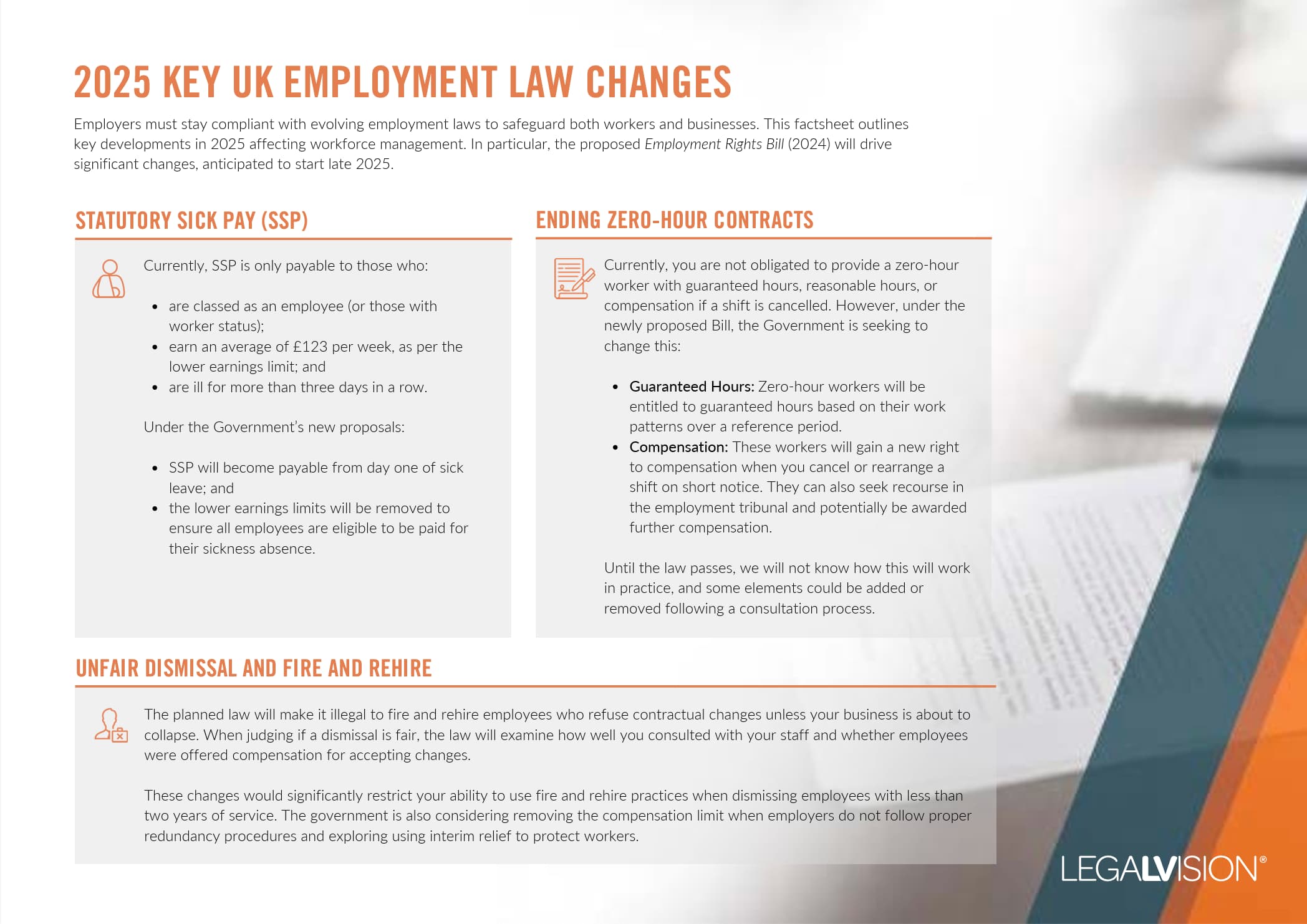
This factsheet outlines key developments in 2025 affecting workforce management.
Key Takeaways
As an employer, it is important that you are aware of your new obligations towards your staff. The Worker Protection Bill (Amendment of Equality Act 2010) 2023 will strengthen employer obligations to prevent and respond to sexual harassment from October 2024 by implementing new ‘preventative duties’. These will not only include preventing sexual harassment from occurring in your workplace but also taking and demonstrating reasonable steps. In either case, a failure to do so could result in the Equality and Human Rights Commission investigating and enforcing your obligations.
You can create a healthy and safe workplace culture by:
- implementing preventative mechanisms;
- creating and advising your employees of transparent reporting channels;
- handling complaints sensitively and fairly;
- staying up to date with legislative changes; and
- adequately training your staff.
LegalVision provides ongoing legal support for businesses through our fixed-fee legal membership. Our experienced employment lawyers help businesses manage contracts, employment law, disputes, intellectual property, and more, with unlimited access to specialist lawyers for a fixed monthly fee. To learn more about LegalVision’s legal membership, call 0808 196 8584 or visit our membership page.
Frequently Asked Questions
How can I handle complaints of sexual harassment in a sensitive and fair manner?
Handling complaints of sexual harassment with sensitivity and fairness is crucial to maintaining a respectful workplace. As an employer, you should ensure that you have a confidentiality policy that you follow whenever you conduct an investigation.
What are the consequences of failing to prevent sexual harassment?
The employment tribunal may impose penalties against you. Additionally, you may be held vicariously liable if the harassment occurs in a work-related setting.
How long do employees have to bring a claim?
Employees can bring a sexual harassment claim up to six months after their employment ends, extending the previous time limits and increasing employer exposure.
What practical steps help employers comply?
Employers should update policies, train staff, assess risks and create clear reporting channels. A proactive system of prevention and regular review helps demonstrate compliance with the new duty.
We appreciate your feedback! Request your free consultation now.


