


Summary
- General employee inductions are not a legal requirement, but health and safety inductions are mandatory and must be provided during working hours at no cost to employees.
- Inductions must comply with anti-discrimination obligations, including making reasonable adjustments for employees with disabilities under the Equality Act.
- Employers should also consider bribery risks under the Bribery Act 2010 when designing inductions for relevant roles.
- This article is a plain-English guide for Australian business owners on the legal requirements and best practices surrounding employee inductions.
- It has been produced by LegalVision, a commercial law firm that specialises in advising clients on employment law matters.
Tips for Businesses
Conduct health and safety inductions on work time at no cost to staff. Tailor inductions to each role, accounting for disability adjustments and bribery risks where relevant. Extend inductions beyond a single day and provide key information before the employee’s start date.


When you run a business as an employer, there will be times when new staff are required, and there may also be instances where existing staff get a new role. When an employee starts a new job role, it is good practice to provide new starters with an employee induction. There are also some legal requirements regarding the induction process. This article will explain employee induction in terms of legal requirements and best practices for an effective induction programme for a new or existing staff member.
What is an Employee Induction?
An employee induction from your business should be a chance for recruits to be welcomed. It is designed to help them settle in and give them the information and knowledge they need to fulfil their job roles. This can also help you retain your staff and have good relations with your employees.
It is also a good practice to give existing staff employee inductions as they move from one role to another in your business.
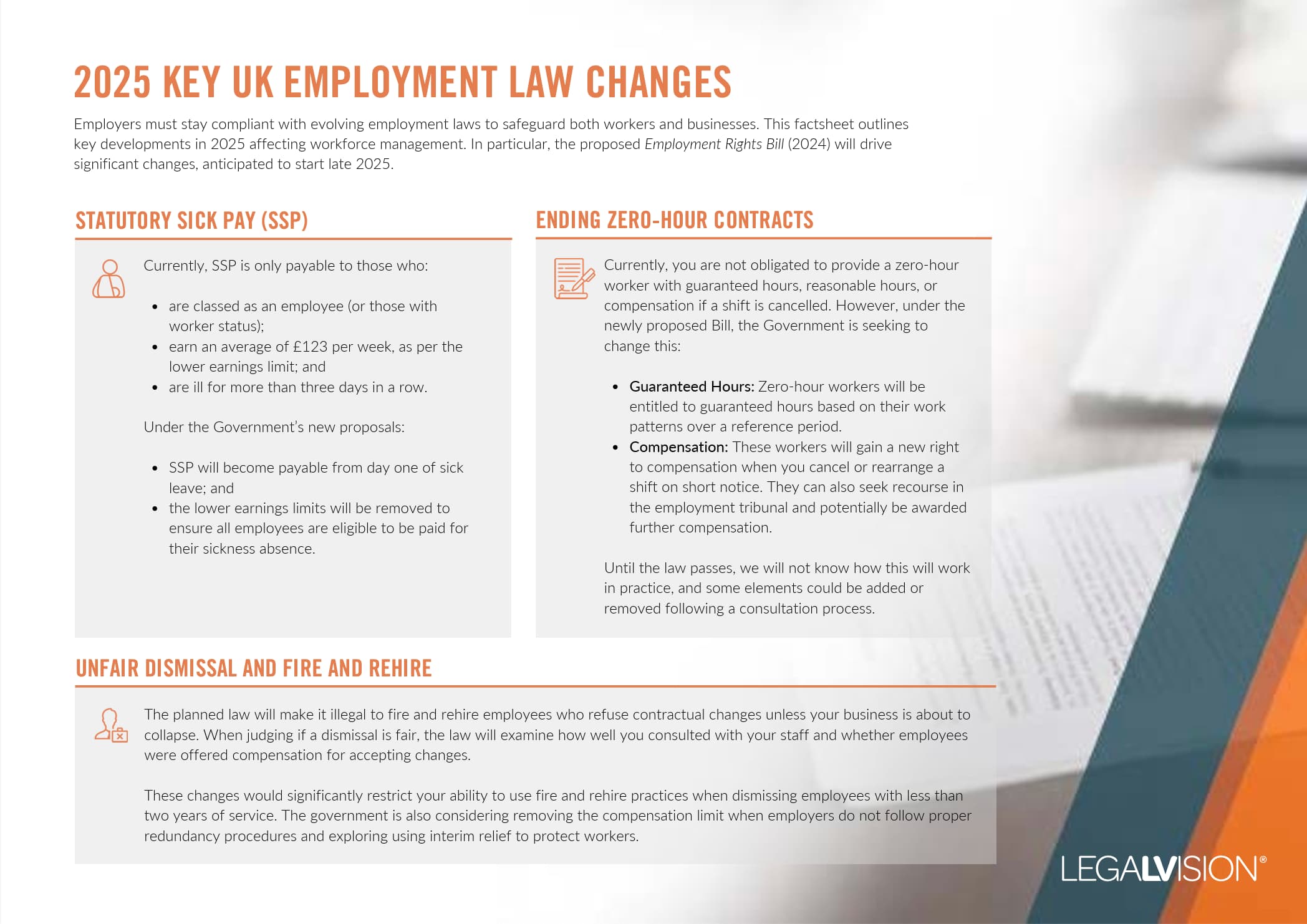
This factsheet outlines key developments in 2025 affecting workforce management.
Is an Employee Induction a Legal Requirement?
Although it is good practice, it is not a legal requirement for you as an employer to conduct general employee inductions. However, it is a legal requirement for you to carry out a health and safety induction for your employees. This obligation on you as an employer mainly stems from the Management of Health and Safety at Work Regulations.
The level of health and safety training on induction will depend on factors such as the seniority of your employee. However, you must ensure when you carry out the induction that you do so:
- during working hours;
- at no cost to your employees; and
- with special arrangements for part-time workers and shift workers.
As an employer, it is up to you to decide the health and safety training aspect of your employee’s health and safety inductions. However, you will need to consider:
- what your health and safety risk assessment says;
- any legal requirements you must comply with;
- the results of your health and safety audit; and
- anything your business insurance provider requires you to include.
Call 0808 196 8584 for urgent assistance.
Otherwise, complete this form, and we will contact you on the same business day.
What Legal Factors Affect My Employees’ Inductions?
While your employee induction is not a legal requirement except for the requirement for a health and safety induction, there are legal factors you need to consider when creating an employee induction. One of these is tailoring it to factor in the Implications of the Bribery Act 2010 if your employees are in a position that makes them likely to be affected by bribery risks.
A further legal factor to consider for your employee induction is that, as an employer, you are prohibited from carrying out discrimination in the workplace. Therefore, you should ensure that your induction does not disadvantage any employee affected by protected characteristics such as race or disability. Also, the Equality Act 2021 says that you must provide for those with particular needs and make reasonable adjustments for an induction for a person with a disability.
What is the Best Practice for Employee Inductions?
It is helpful for you as an employer to know some good practices for your employee inductions. Here, we list some examples of good practice. These include:
- sending an employee helpful information before their first day of employment;
- introducing your employee to other members of staff;
- ensuring the induction lasts more than a day and potentially one week in length;
- explaining how your business works and showing them where facilities are located;
- explaining your company’s rules and how you assess performance; and
- letting your employee know more about their role.
Key Takeaways
An employee induction allows you to welcome new employees or those in new job roles. It is a chance to provide information about their job role. You are not legally obligated to give an employee induction, but it is a legal requirement to provide a health and safety induction. Your business can decide what this includes, but there are rules surrounding it, such as it has to be provided during work hours. You must consider legal requirements when providing an employee induction, such as not discriminating illegally. Providing an employee induction is good practice, and there are best practice ways of providing one. For example, ensuring it lasts more than one day.
LegalVision provides ongoing legal support for businesses through our fixed-fee legal membership. Our experienced employment lawyers help businesses manage contracts, employment law, disputes, intellectual property, and more, with unlimited access to specialist lawyers for a fixed monthly fee. To learn more about LegalVision’s legal membership, call 0808 196 8584 or visit our membership page.
Frequently Asked Questions
What is an employee induction?
An employee induction is an opportunity to welcome staff to their job by providing information about their role and your organisation.
Is an induction a legal requirement?
Although an induction is not a legal requirement, providing employees with a health and safety induction is.
Does a health and safety induction cost employees anything?
No, you must provide the health and safety induction at no cost to your employees, during working hours, with special arrangements for part-time and shift workers.
Must inductions account for employees with disabilities?
Yes, you must make reasonable adjustments for employees with disabilities under the Equality Act.
We appreciate your feedback! Request your free consultation now.


