


Summary
- A fixed-term contract ends automatically on its agreed date unless it is renewed or extended by agreement.
- Renewal can involve extending the term or offering a permanent role, but terms should be agreed and documented clearly.
- Not renewing a fixed-term contract is treated as a dismissal and may require a fair reason and process, especially after two years’ service.
- This guide explains renewing and ending fixed-term contracts for business owners and employers in the UK, prepared by LegalVision, a commercial law firm that specialises in advising clients on employment law.
- It provides a practical explanation of renewal options, dismissal risks and compliance obligations when contracts end.
Tips for Businesses
Start renewal discussions early and document any extensions clearly. Follow notice and dismissal procedures when not renewing. Ensure decisions are fair and non-discriminatory. Avoid repeated renewals without justification, as employees may gain permanent status and increased legal protection over time. Speak to an employment lawyer at LegalVision to learn more about renewing or ending fixed-term employment contracts.


A fixed-term employment contract sets an end date or ends when an employee completes a specified task. For employers, an approaching expiry date prompts a decision about extending employment, offering a permanent role or ending the arrangement. Planning ahead gives you time to discuss options with the employee and record any agreed changes. Choosing not to renew a contract counts as a dismissal and can trigger unfair dismissal or redundancy rights. This article explains how to renew or end fixed-term employment contracts and manage the legal risks for UK employers.
Understanding Fixed-Term Contracts
A fixed-term employment contract automatically terminates on a specified future date or after a defined period unless renewed by mutual agreement. Employees are usually considered to be on fixed-term contracts where they have an employment contract with you, and their contract ends on a particular date or on completion of a specific task. There are a number of different types of fixed-term contracts:
- Pure Fixed Term: This gives you the most control and predictability. You know exactly when the employment will end, and you do not need to worry about giving notice. It is ideal for project-based work with a clear end date.
- Fixed Term with the Option to Give Notice: This offers flexibility, where you can end the contract before the fixed term is up. This is useful if the work is finished early or your circumstances change. However, the employee also has this option, which could leave you short-staffed unexpectedly.
- Initial Fixed Term, Which Terminates on Notice: This ensures you have the employee for a minimum period, which is useful for longer-term planning. After that, you have the flexibility to extend the employment or end it with notice.
- Initial Fixed Term, Which Only Terminates on Notice: This gives you guaranteed service for a set period, which can be beneficial for critical roles or specific projects. After the fixed term, it essentially becomes an open-ended contract that you can terminate with notice. This can be useful if you want to retain the option of keeping the employee long-term.
The defined duration of the contract is a key term, alongside typical employment details such as role, salary, benefits and notice periods. Unlike open-ended permanent contracts, a fixed-term contract includes an expiry point at which employment will cease unless renewed.
Renewing Fixed-Term Contracts
If you wish to retain a fixed-term employee beyond the initial term, you have two options:
- extending the contract; or
- offering a permanent contract.
Extending the Contract
As the contract’s end date approaches, you can discuss extending the existing contract for an additional defined period agreeable to both parties.
For instance, a 12-month fixed-term contract can be extended for another 6 months. Documenting this extension through a written addendum to the existing contract is crucial to prevent ambiguity or future disputes. If you propose renewing a fixed-term contract on less favourable terms, the employee has the right to negotiate. They may claim unfair dismissal if no agreement is reached by the renewal date.
“Treat the expiry date as a planning deadline, rather than the whole reason for ending employment. Start with whether the role still exists, then document why renewal, permanent employment or dismissal fits the circumstances.”

Offering a Permanent Contract
Based on the employee’s performance, you may decide to offer a permanent contract. This involves allowing the fixed-term contract to expire and then providing the employee with a new open-ended permanent contract.
In this case, it is important to issue a new employment contract. The employee’s continuous service during the fixed-term period counts towards their statutory employment rights. Under UK regulations, fixed-term employees must not be treated less favourably than permanent employees.
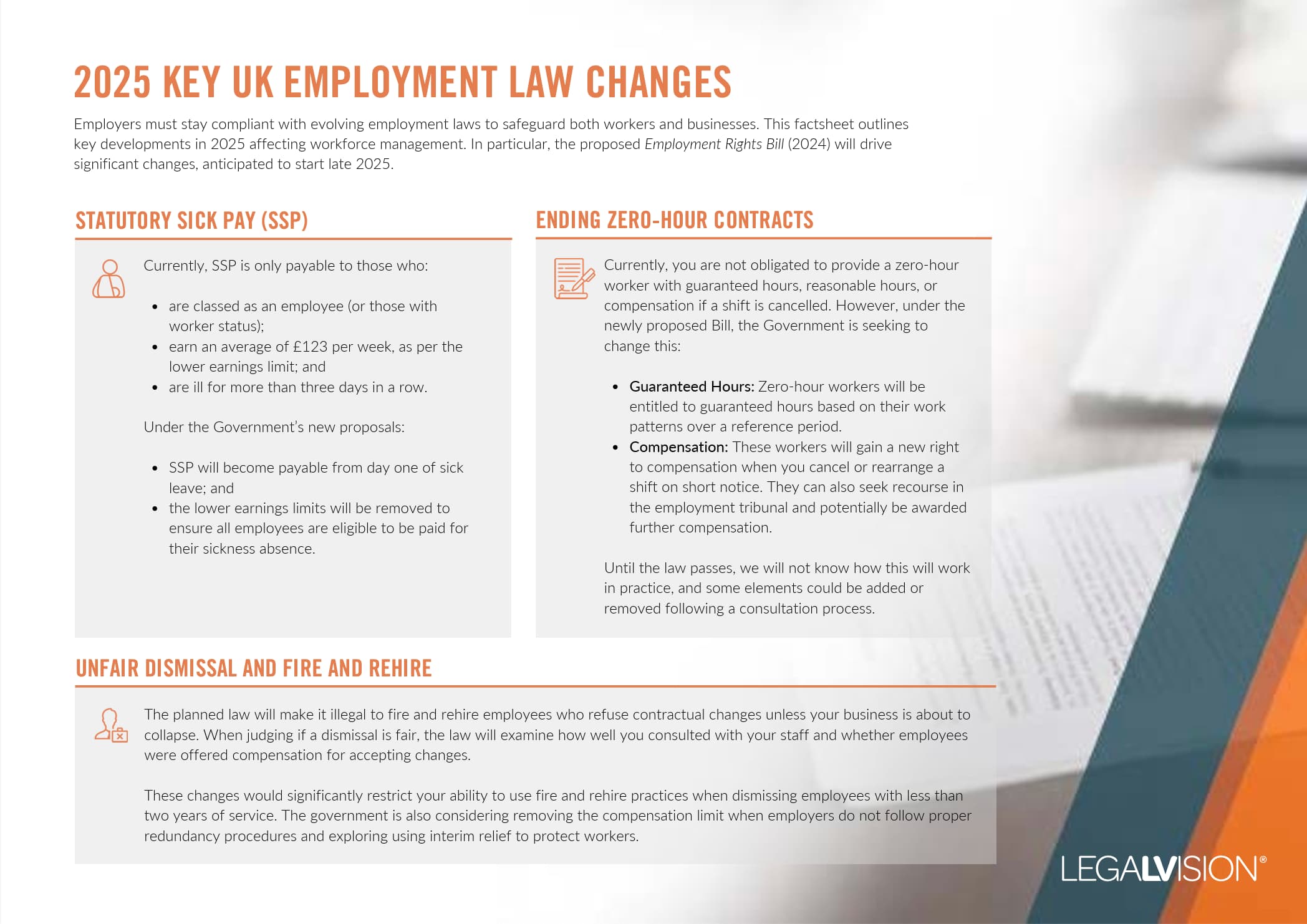
This factsheet outlines key developments in 2025 affecting workforce management.
Call 0808 196 8584 for urgent assistance.
Otherwise, complete this form, and we will contact you on the same business day.
Risks of Unfair Dismissal Claims
You should proactively communicate with fixed-term employees ahead of their scheduled termination date. Failing to do so can lead to unfair dismissal claims, particularly if the employee has over two years of continuous service.
Initiate discussions approximately six to eight weeks before the contract’s end date to allow ample time for agreement on the next steps.
Not Renewing a Fixed-Term Contract
There may be instances where extending a fixed-term contract is unnecessary, such as completing a specific project or unmet performance expectations.
In these cases, you can confirm that the fixed-term contract will lapse on its termination date. You must also adhere to the contractual notice periods and dismissal processes outlined in the original fixed-term contract.
Key considerations when ending fixed-term contracts are outlined below.
Notice Periods
The contract should specify the notice period required for termination, typically between 1 to 3 months. As an employer, you must provide this notice period before ending the contract.
Dismissal Reasons
While the end of a fixed-term contract is in some ways ‘automatic’, you must provide the employee with specific reasons for the dismissal if requested, such as the completion of project work.
If requested, provide written reasons for not renewing the contract after one year of service. Employees may be entitled to redundancy payments if non-renewal is due to redundancy and they have over two years of service.
The non-renewal of a fixed-term contract constitutes a dismissal. Therefore, if the employee has over two years of continuous service, you must demonstrate a fair reason for non-renewal, such as the cessation of the work.
Early Termination
Early termination depends on the contract terms, where you may end the contract accordingly if early termination is allowed with proper notice. Without a provision for early termination, ending the contract prematurely could constitute a breach of contract.
At a minimum, fixed-term employees are entitled to statutory notice periods of one week:
- if employed for over one month; or
- per year of service if employed for over two years.
Working Beyond the End Date
If an employee continues working after the fixed-term end date without renewal, there is an implied agreement that the contract has been extended for another term equal to the term in the fixed-term contract. Appropriate notice must then be provided to dismiss the employee.
Discrimination
You should ensure that the criteria for retaining or not retaining fixed-term staff are applied fairly and are not discriminatory based on protected characteristics, for example, race or gender.
Key Takeaways
Fixed-term contracts are beneficial because they provide flexibility for temporary staffing needs and evaluating workers for permanent roles. However, if you renew or extend a fixed-term contract, you must remember to document extensions in writing. Fixed-term employees may gain permanent status after four years unless objective business reasons justify otherwise. Additionally, if you choose not to renew the contract, you must offer clear reasons for non-renewal to avoid legal disputes. Communicate proactively with employees to mitigate the risk of unfair dismissal claims.
If you are renewing or extending an employment contract, LegalVision provides ongoing legal support for businesses through our fixed-fee legal membership. Our experienced employment lawyers help businesses manage contracts, employment law, disputes, intellectual property, and more, with unlimited access to specialist lawyers for a fixed monthly fee. To learn more about LegalVision’s legal membership, call 0808 196 8584 or visit our membership page.
Frequently Asked Questions
What happens if an employee continues working after the fixed-term end date?
Allowing an employee to continue working without a formal renewal can create an implied agreement to extend their employment. If you later dismiss the employee, you must give the appropriate notice.
Can fixed-term employees become permanent?
Yes. You can offer a fixed-term employee a permanent contract. Employees on successive fixed-term contracts generally gain permanent status after four years of continuous service, unless you can objectively justify continued fixed-term employment.
Can repeated renewals change the employee’s status?
Yes. Repeated renewals can lead to permanent status after four years of continuous employment. Signing a new fixed-term contract does not restart the employee’s continuous service or automatically prevent them from gaining permanent status.
Do you need to give reasons for not renewing a contract?
Yes. Fixed-term employees can request written reasons for non-renewal after one year of service. Record the reason for your decision and explain it clearly. Non-renewal counts as a dismissal, so you must also consider the employee’s unfair dismissal and redundancy rights.
We appreciate your feedback! Request your free consultation now.


