


Summary
- Employees can refuse to accept a new employment contract or proposed changes to their existing terms.
- Employers generally cannot change contracts without agreement, unless a valid contractual clause allows it or a fair process is followed.
- If agreement cannot be reached, employers may impose changes or dismiss and rehire, which carries legal risk and may lead to claims.
- This guide explains refusing new employment contracts for UK business owners, including legal risks and practical implications.
- It is prepared by LegalVision’s business lawyers, a commercial law firm that specialises in advising clients on employment contract changes.
Tips for Businesses
Consult employees before proposing changes and clearly explain the reasons. Seek agreement wherever possible and document outcomes. Avoid imposing changes without consent, as this can lead to disputes or claims. Consider alternatives and follow a fair process if changes cannot be agreed.


Refusing a new employment contract means an employee does not agree to proposed changes to their existing terms, which employers usually cannot impose without consent. If changes are forced through, employees may continue working under protest or bring legal claims such as breach of contract or constructive dismissal, creating significant legal and employee relations risks for the business. This article explains what happens when employees refuse new employment contracts and how employers should manage the process.
Why Might I Change Employment Contracts?
There are many reasons that you, as an employer, may need to change your employees’ contracts. For example, you may be introducing changes to:
- employees’ responsibilities;
- staff working hours;
- salaries; or
- flexible working policies.
Do My Employees Need to Agree to the Change?
If you wish to change your employee’s employment contract, you will usually need their agreement verbally or in writing. You can encourage your employees to agree by examining the changes you want to make and why. You should also ask them for alternative proposals.
It will help if you allow your employees a reasonable amount of time to discuss your proposed changes to their employment contracts. Where you propose changes to 20 or more employees’ contracts, you must consider collective consultation. This is a legal requirement under the Trade Union and Labour Regulations (Consolidation) Act 1992.
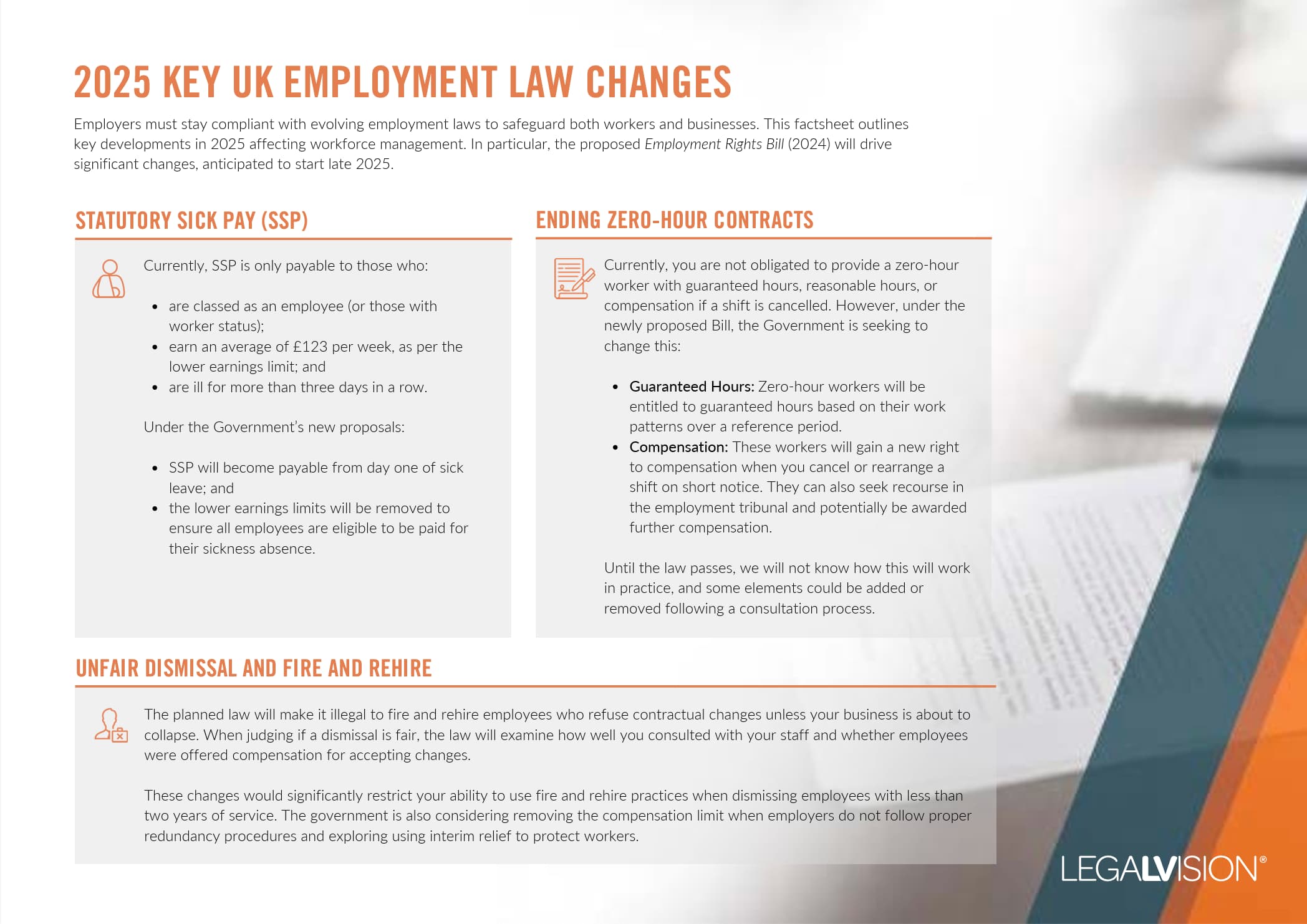
This factsheet outlines key developments in 2025 affecting workforce management.
Call 0808 196 8584 for urgent assistance.
Otherwise, complete this form, and we will contact you on the same business day.
Can My Employees Refuse the Changes?
Your employees have the right to refuse to agree to any changes to their contracts. They may also ask for a trial period to test the changes and see if they are workable. As an employer, you can decide whether or not to agree to a trial period.
If your staff do not agree with the contract changes you have suggested but continue to work under them, they are working ‘under protest’. In this case, your employees must inform you in writing each time they are paid that they disagree with the changes. Your employees may work under protest for a short period of time before bringing legal claims against you.
Even if staff do not take legal action against you, changing contractual terms without their management can lead to poor rapport or industrial action.
What Happens When Employees Agree to a Contractual Change?
If your employees agree to a contractual change, you must:
- update their written statement of employment conditions; and
- inform them of the change within a month.
This applies even if the change is not technically contained in their contracts, such as if it is in the company handbook.
You may dismiss your employees if they disagree with a contract change. However, this is not recommended without legal advice as it could cause a claim of unfair dismissal.
Key Takeaways
You may find that you need to change your employees’ employment contracts, such as to detail a change in their responsibilities. If so, you will usually need to get their agreement, which will involve discussing your proposals and asking them for alternatives. However, your staff are within their right to refuse the changes and continuing with your plans can lead to legal claims such as constructive dismissal. Where employees agree on contractual changes, you should detail these in writing and inform them within one month of their implementation.
LegalVision provides ongoing legal support for businesses through our fixed-fee legal membership. Our experienced employment lawyers help businesses manage contracts, employment law, disputes, intellectual property, and more, with unlimited access to specialist lawyers for a fixed monthly fee. To learn more about LegalVision’s legal membership, call 0808 196 8584 or visit our membership page.
Frequently Asked Questions
Do I need my employee’s agreement to change the employment contract?
As an employer, you will usually need your employees’ agreement before changing their employment contracts.
What is working ‘under protest’?
If you change your employees’ employment contract terms without their agreement, and they continue to work and let you know they are unhappy, this is working ‘under protest’.
What happens if an employee refuses contract changes?
If an employee refuses, you should consult with them and consider alternatives. Imposing changes unilaterally may expose your business to claims such as constructive dismissal.
What should employers do before changing employment contracts?
You should discuss proposed changes with employees, seek agreement, and clearly document any updates. This helps reduce disputes and ensures compliance with employment law requirements.
We appreciate your feedback! Request your free consultation now.


