


Summary
- Your construction contract should allocate responsibility for design, payment, delays and defects.
- Liability caps and indemnities cover specified risks, but legal limits can restrict their effect.
- Follow the contract when instructing changes and keep evidence of their effect on price and timing.
- This article explains construction risk management for businesses commissioning or carrying out small commercial projects in England and Wales.
- LegalVision’s business lawyers specialise in advising clients on construction contracts and disputes.
Tips for Businesses
Compare your contract with the final drawings before signing. Name the person who can issue instructions and keep a record of outstanding decisions. Ask your broker to check insurance against the work. Speak to a construction lawyer at LegalVision about allocating design responsibilities and managing changes to your project.


On this page
Managing risk in a small construction project starts with agreeing responsibilities and checking progress. A written contract should clarify who handles design, payment, delays and defects, supported by suitable insurance and clear records. This guide explains how to assess risks and agree practical protections for commercial projects in England and Wales. Your legal position depends on the contract and circumstances. Projects elsewhere in the UK require advice on local rules.
1. Identify the Project Risks
Start by identifying what could prevent your project from meeting its budget, completion date or agreed standard. Discuss these risks with the other party before choosing contract terms. Both the business commissioning the work and the contractor should explain their priorities.
The employer commissions the work under the contract. The contractor is the business engaged to carry it out. These descriptions concern project roles, rather than an employment relationship.
For a shop refurbishment, the reopening date may affect staffing and deliveries. Identify decisions you can change, such as finishes, and requirements you need to keep. Check when the team needs information about access or materials.
2. Agree Design and Construction Responsibilities
Agree who will design the work and who will build it. Record who approves drawings and answers technical questions.
Your procurement route, meaning how you organise design and construction, affects these responsibilities. Check the actual obligations before relying on the arrangement’s label.
Choose How to Organise the Work
Compare the main arrangements against your project’s needs.
| Arrangement | Design Responsibility | Construction Responsibility |
| Design and build | The contractor generally takes responsibility within the agreed scope. | The contractor carries out the agreed construction work. |
| Construct only | The employer separately appoints designers. Check any design duties accepted by the contractor. | The contractor carries out the agreed construction work. |
Check the scope in each appointment so design questions reach the right person.
Contractual responsibilities sit alongside health and safety duties. The Health and Safety Executive’s guidance for commercial clients explains that these duties apply regardless of project size.
Continue reading this article below the formCall 0808 196 8584 for urgent assistance.
Otherwise, complete this form, and we will contact you on the same business day.
3. Choose a Suitable Written Contract
Choose a written construction contract that matches the work and how you intend to organise it. Set out the price, payment arrangements and completion requirements. Compare the agreement with the drawings and specifications so everyone works towards the same result.
Many projects use standard forms, including contracts published by the Joint Contracts Tribunal, known as JCT. These provide a starting framework. Amendments can change it, so read the complete agreement before signing.
A short agreement may suit a smaller or less complex project. It still needs to address time, payment, quality, defects and insurance. Compare the available construction pricing arrangements with the cost certainty your business needs.
4. Review the Contract’s Risk Provisions
Check how your contract deals with delays, defective work and financial exposure. Read these terms together before signing.
Test how they would apply to a realistic problem, such as late materials. Identify who must give notice and what records they need to support it.
Check Delay and Defect Procedures
An extension of time moves the contractual completion date. Many contracts specify events that allow the contractor to seek extra time. Check the notice requirements and who assesses the request.
Keep the original programme, meaning the work schedule, and any agreed revisions. Review the separate provisions dealing with delay costs. Extra time does not automatically create a payment entitlement.
Understand Indemnities and Liability Caps
An indemnity is a promise to cover specified losses. Check what triggers it and which losses it covers. Examples may include property damage or infringement of intellectual property rights, meaning rights protecting creations such as designs.
A liability cap limits financial exposure for specified claims. Check its amount and which claims fall outside it. Read the cap alongside the indemnities and insurance provisions.
In business contracts, you cannot exclude liability for death or personal injury caused by negligence. Negligence means failing to take reasonable care. Restrictions on other negligence losses must meet a reasonableness requirement.
The official rules on liability restrictions explain these limits.
Check Exceptional Events and Additional Security
A force majeure clause addresses specified events beyond a party’s control. Depending on its wording, it may allow suspended obligations or extra time. Check the listed events and required steps before relying on it.
Extreme weather does not produce the same result under every contract. The court’s explanation of exceptional event clauses shows why the agreed wording matters. Keep evidence of how the event affected the work.
Some projects need additional protection. A collateral warranty gives another party direct contractual promises. A parent company guarantee backs specified obligations of a related company.
A performance bond provides third-party security for specified contractor failures. Assess each document’s cost and purpose against the risk you want to address.
5. Arrange Suitable Insurance
Choose insurance that reflects the work and the responsibilities each party accepts. Give your broker the contract and an accurate project description.
Explain any design responsibilities and work on existing premises. Ask how the policies address damage to the works and the existing building. Check who arranges each part of the cover.
Keep evidence of the agreed insurance with the project records. Name the person who will check renewal dates during the work. Discuss material changes with your broker so the cover reflects what the team plans to do.
“Walk through a proposed change with the people ordering materials and arranging trades before settling its wording. Their practical questions can reveal a timing assumption that needs resolving before the instruction goes out”

6. Manage Changes to the Work
Follow the contract’s procedure when changing the agreed work or terms. A variation is a change to that agreement.
Record its scope and likely effect on price and timing. Check who can issue instructions before treating an informal request as authority to proceed.
Assess the Effect Before Giving Instructions
In a hypothetical shop refurbishment, the owner asks the contractor to move a partition. This may affect electrical work, material orders and the sequence of other trades.
Compare the request with the agreed drawings. Ask the relevant designer or contractor to explain the practical effects. Record the proposed work, pricing assumptions and any expected delay.
Separate confirmed information from estimates. If a supplier has not confirmed a delivery date, record that uncertainty.
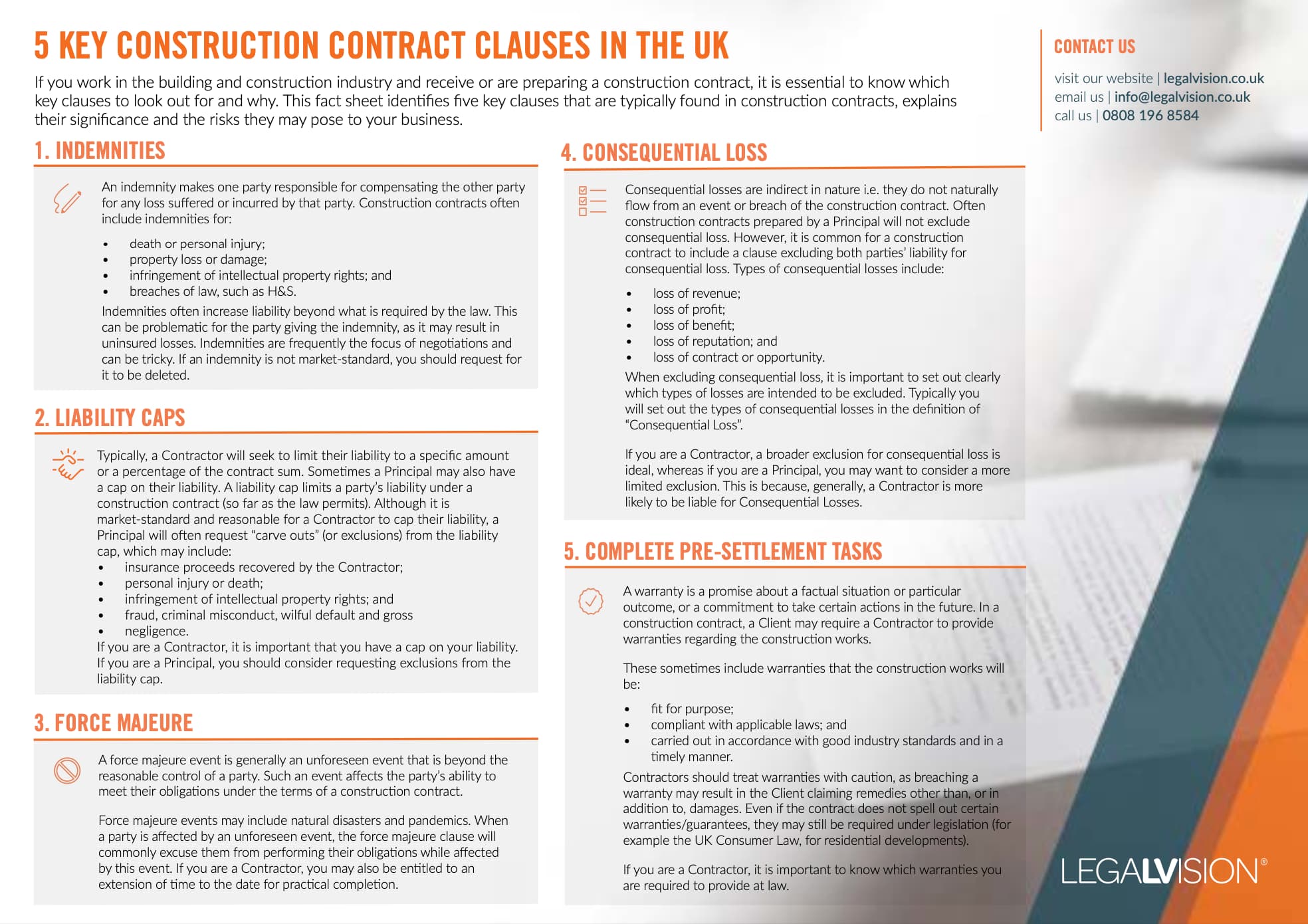
This fact sheet identifies five key clauses that are typically found in construction contracts, explains their significance and the risks they may pose to your business.
Follow the Approval Process
Check the requirements for documenting and agreeing variations. Identify who issues instructions and who receives them. Ask your lawyer about unclear approval or notice requirements.
Keep the proposal, response and revised documents together under a clear reference. Update the working drawings after the change is resolved. Share the agreed position with the people arranging labour and deliveries.
If price or timing remains disputed, record the point separately. Seek advice before assuming payment or stopping work.
7. Keep the Project Under Review
Check progress against the agreed programme and raise concerns promptly with the person responsible for responding. Regular reviews give the team time to discuss practical solutions. Keep discussions focused on the specific issue and the outcome needed, supported by records made during the work.
Use these checks throughout the project:
- Meet before work starts to confirm responsibilities and how to raise urgent questions.
- Inspect at suitable intervals and record progress against the programme.
- Record instructions, payments and decisions as they occur.
- Give outstanding questions an owner and a response date.
- Check the contract if a disagreement continues and seek advice about resolving a building dispute.
Prepare the Handover Before the Final Visit
Plan how the contractor will hand the finished work back to your business. Ask the person managing the contract to identify the documents needed at completion. Check who gathers them and when they should arrive.
For a shop refurbishment, these may include updated drawings, equipment instructions and details of agreed maintenance arrangements. Ask which documents apply to your project. Keep them somewhere the person running the premises can access after the site team leaves.
In a hypothetical project, a manager may need instructions for operating a ventilation system before staff return. Ask the supplier who will explain the controls. Agree when that discussion will happen and who from the business should attend.
Keep Outstanding Matters Visible After Handover
Use a single handover record to track unresolved items. Include the location, relevant photograph, responsible contact and agreed next action. Keep the supporting correspondence with that record so another manager can understand the position later.
Check the contract’s completion requirements with the person administering it. Ask what needs formal confirmation and who provides it. Keep operational plans, such as reopening arrangements, clear about anything still awaiting confirmation.
If the contractor needs to return, discuss access with the person running the premises. Identify any trading hours or delivery arrangements that affect the visit. Record the work completed and any remaining questions after attendance.
Keep the agreed final drawings separate from earlier versions. Retain the history of changes so the team can trace what happened. Give replacement staff enough information to find the right document without relying on someone’s memory.
Key Takeaways
Your construction contract can allocate responsibility for design, delays and defects. Its protections depend on the agreed wording and applicable legal limits. A liability cap cannot remove every exposure, and extra time does not automatically entitle a contractor to extra payment.
Match insurance to the responsibilities each party accepts. Follow the contract when managing changes and keep records through handover. These steps help both employers and contractors respond to problems with a clearer understanding of their position.
LegalVision provides ongoing legal support for businesses through our fixed-fee legal membership. Our experienced construction lawyers help businesses manage contracts, employment law, disputes, intellectual property, and more, with unlimited access to specialist lawyers for a fixed monthly fee. To learn more about LegalVision’s legal membership, call 0808 196 8584 or visit our membership page.
Frequently Asked Questions
Why should small construction projects adopt a written contract?
A written contract can clarify responsibilities, payment arrangements and completion requirements. It also sets out how the parties address delays, changes and defects. Choose terms that match the project rather than relying on a general template without review.
What practical steps can I take to mitigate risks in a small project?
Assess the project risks before work starts and agree who will manage each one. Use suitable insurance and keep written project records. Review progress regularly and raise concerns with the responsible person promptly.
Who is responsible for design in a construction project?
Responsibility depends on the agreed contract scope. A design and build contractor generally takes responsibility for design and construction. Under construct only, the employer separately appoints designers, while any design duties accepted by the contractor still need checking.
Can a contract protect my business from every construction loss?
A contract cannot remove every risk. Liability caps and indemnities cover the matters specified in their wording, and legal limits can restrict their effect. Check these terms alongside your insurance arrangements.
We appreciate your feedback! Request your free consultation now.


