


Summary
- Contracts with minors (under 18) are generally unenforceable in England and Wales, except for necessities or agreements that clearly benefit them.
- Selling age-restricted goods such as alcohol, tobacco, or age-classified video games to minors is a criminal offence, regardless of how the sale occurs.
- Businesses must implement reliable age verification measures; self-declaration by customers or card payments alone are not sufficient.
- This article is a plain-English guide for online business owners operating in England and Wales on the legal rules around selling to minors.
- It has been prepared by LegalVision, a commercial law firm that specialises in advising clients on e-commerce and consumer law compliance.
Tips for Businesses
Include clear age-restriction terms in your website’s terms and conditions. Use robust age verification software or ID checks on delivery for restricted products. Train staff to identify suspicious orders. Keep transaction records, including verification steps. Review your processes regularly to reflect changes in law and technology.


Selling to minors online in England and Wales carries real legal risk. Contracts with under-18s are generally unenforceable, and selling certain age-restricted products to minors is a criminal offence. This article applies to online businesses operating in England and Wales. This article explains what you need to know about selling to minors
Can You Sell Online to Someone Under 18?
When a customer buys something from your online store, you are forming a contract with them. For that contract to be legally binding, a few things need to happen:
- you make an offer (for example, listing a product on your website);
- the customer accepts that offer (usually by placing an order);
- both sides exchange something of value (the customer pays money, you supply the goods);
- both sides intend the agreement to be legally binding; and
- both sides are legally capable of entering into a contract.
That last point is where things get tricky when you sell to minors. Under the law in England and Wales, a person under 18 is not considered legally capable of entering into a contract. This means if a minor buys something from your online business, the contract generally is not enforceable.
If what you sell does not fall into one of these categories, any goods you sell to minors are sold at your own risk. For this reason, it is a good idea to include a clause in your website terms and conditions starting that only adults over 18 can use your site and purchase from you.
If you are comfortable with under-18s browsing your site (for example, if you sell children’s toys), your terms should state that minors may only use the website with the permission and supervision of a parent or guardian.
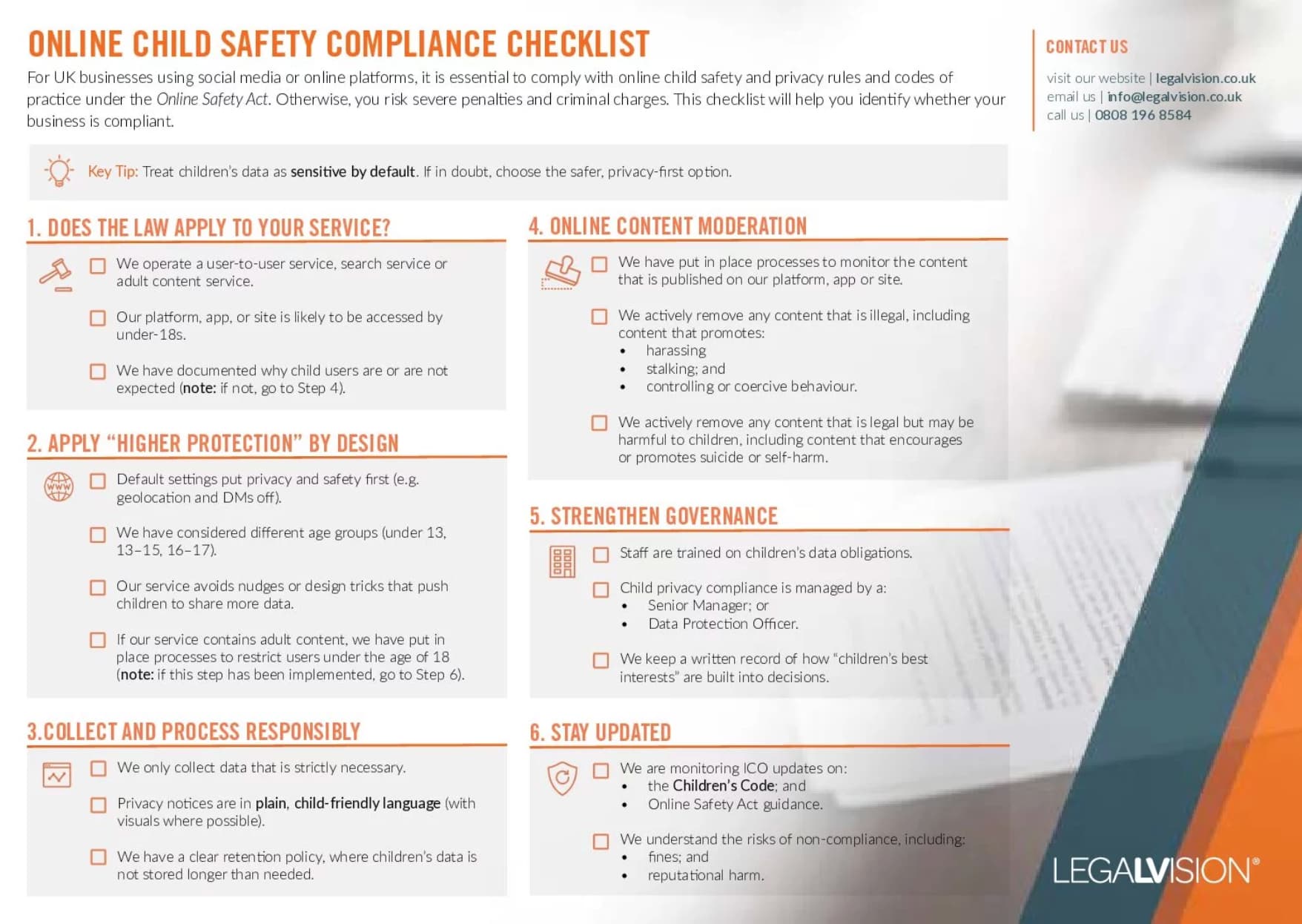
This checklist will help you identify whether your business is compliant with privacy rules and codes of practice under the Online Safety Act.
What Age-Restricted Goods Cannot Be Sold to Minors?
Even if you decide you are happy to sell to minors in certain conditions, you must note that in England and Wales, some underage sales are illegal. Therefore, you must have systems in place to ensure that people under 18 cannot purchase particular age-restricted goods. Examples of some of these goods are:
- fireworks and sparklers;
- alcohol;
- knives and other bladed articles;
- Botox and cosmetic fillers;
- lottery tickets;
- nicotine inhaling products;
- tobacco products, including cigarette papers; and
- video games, DVDs and Blu-rays, which are age-classified (e.g. you must be 12 or over to buy a DVD classified 12, 15 or over if the classification is 15 and 18 or over for those classified 18).
Call 0808 196 8584 for urgent assistance.
Otherwise, complete this form, and we will contact you on the same business day.
How to Verify a Customer’s Age Online
You must take reasonable steps to ensure you do not sell any age-restricted products to someone younger than the relevant age. It will not be enough to rely on the customer telling you that they are over the relevant minimum age or asking them to give you their date of birth. Nor can you rely on a statement saying something like, ‘by ordering this product, you confirm you are over 18’. You also cannot rely on someone paying by credit card since those under 18 can get debit or prepaid cards. Payment processors cannot necessarily tell the difference between a payment card only available to adults and one for minors.
Instead, you will need to think about how you can verify your customer’s identity. For example, you could work with your chosen delivery drivers to ensure that the person who has ordered the goods must show their ID before giving the customer their goods. Alternatively, you could use online age verification software to check the age of those ordering. Age verification software works by using sources such as the electoral register and credit check agencies to verify a person’s age.
Practical Steps to Stay Compliant
Beyond the legal rules, a few practical habits can protect your business if an underage sale is ever challenged.
You should keep clear records of every transaction, including timestamps, delivery confirmations and any age verification checks you carried out. If a dispute arises, these records help you show that you took reasonable steps to prevent selling age-restricted goods to minors.
If you have staff involved in order processing, customer service or fulfilment, make sure they understand the rules on selling to minors. Even in a fully online setup, your team should know how to spot a suspicious order and what to do when a customer appears to be underage.
Your website design matters too. Avoid marketing age-restricted products in a way that appeals to children, use clear product descriptions, and display visible age restriction warnings at key points in the buying journey. These small design choices demonstrate responsible practice and reduce your risk.
Finally, review your terms, systems and age verification processes regularly. Laws, technology and customer expectations all change and what worked a year ago may not be enough today.
Key Takeaways
Selling to minors online in England and Wales raises two key risks. First, a contract with someone under 18 is generally not legally enforceable, so if something goes wrong, you cannot rely on it as a valid sale. Second, it is illegal to sell age-restricted goods such as alcohol, tobacco and age-restricted video games to under-18s, so you must have effective age verification measures in place to prevent underage purchases.
LegalVision provides ongoing legal support for businesses through our fixed-fee legal membership. Our experienced e-commerce lawyers help businesses manage contracts, employment law, disputes, intellectual property, and more, with unlimited access to specialist lawyers for a fixed monthly fee. To learn more about LegalVision’s legal membership, call 0808 196 8584 or visit our membership page.
Frequently Asked Questions
Can I sell lottery tickets to someone under 18 online?
No. Lottery tickets are age-restricted goods, and selling them to minors is illegal in England and Wales. You must implement effective age verification measures to prevent underage purchases.
Does paying by debit card prove a customer is over 18?
No. Minors can access debit or prepaid cards, so card payments do not confirm age. You must use reliable verification methods, such as ID checks on delivery or age verification software.
What records should I keep to protect my business from underage sale disputes?
Keep clear records of every transaction, including timestamps, delivery confirmations, and age verification checks. These demonstrate you took reasonable steps to prevent selling age-restricted goods to minors.
Can minors legally buy children’s toys from my online store?
Technically, contracts with under-18s are generally unenforceable unless the goods are necessities. Include terms stating only adults may purchase, and that minors may only browse with parental permission and supervision.
We appreciate your feedback! Request your free consultation now.


