


Summary
- TUPE applies to a business transfer and to a service provision change, including outsourcing, insourcing and retendering.
- Employees transfer automatically on their existing terms, keep their continuous service, and bring the old employer’s liabilities with them.
- An employment tribunal can award up to 13 weeks’ uncapped gross pay for each affected employee where an employer fails to inform and consult.
- This guide explains TUPE transfers and consultation duties for UK employers and business owners.
- LegalVision’s employment lawyers advise UK businesses on TUPE consultation timelines, employee liability information before a transfer, and dismissals connected to a transfer.
Tips for Businesses
Send the new employer written employee liability information at least 28 days before the transfer date. A tribunal can award the new employer at least £500 for each employee where that information arrives late or wrong. Check whether you already recognise a trade union before choosing direct consultation. Remember you cannot select which employees transfer. Speak to an employment lawyer at LegalVision about timing your TUPE consultation and information duties.


TUPE stands for the Transfer of Undertakings (Protection of Employment) Regulations 2006. The TUPE Regulations protect employees across the UK when a business changes hands or a service moves to a new provider. TUPE applies to two situations: a business transfer, and a service provision change such as outsourcing, insourcing or re tendering. Affected employees transfer automatically on their existing terms, keep their continuous service, and carry accrued rights and liabilities to the new employer. TUPE covers organisations of every size, including public sector bodies and charities. Employers on both sides must inform affected employees, and consult them where they plan measures. This article explains what TUPE means, when it applies to a business transfer or a service provision change, how it protects transferring employees, and what your consultation and information duties involve.
What Does TUPE Mean?
TUPE is the abbreviation for Transfer of Undertakings (Protection of Employment). This legislation protects your employee’s rights if they transfer from you to another employer within the UK.
This could be either a:
- business transfer, which means part of an organisation or business or all of it transfers to a different company or two companies merge to form a new one; or
- a service provider change, which is when a service is transferred to a different provider through a contract, such as a company taking on the security of a shop.
TUPE applies to all businesses regardless of size and is not limited to private companies like yours; it also applies to the public sector and charities.
Do I Always Need to Comply With TUPE?
TUPE is legal protection for employees and will protect anyone who works for you if they are legally classified as an employee. The legislation sometimes protects those lawfully classified as workers but does not protect agency workers. An employment lawyer can help you to understand this fully, as it can be confusing.
If your business is involved in a business transfer or service provider change, you must comply with TUPE, where either meets the criteria.
The criterion a business transfer or service provider change must meet to comply with TUPE includes, for example:
- giving specific information to affected employees or their elected employee representative, which applies depending on the size of your business;
- consulting with the representatives regarding the transfer; and
- if you are the old employer, giving the new one specific information about the employees transferring, such as their employment contracts.
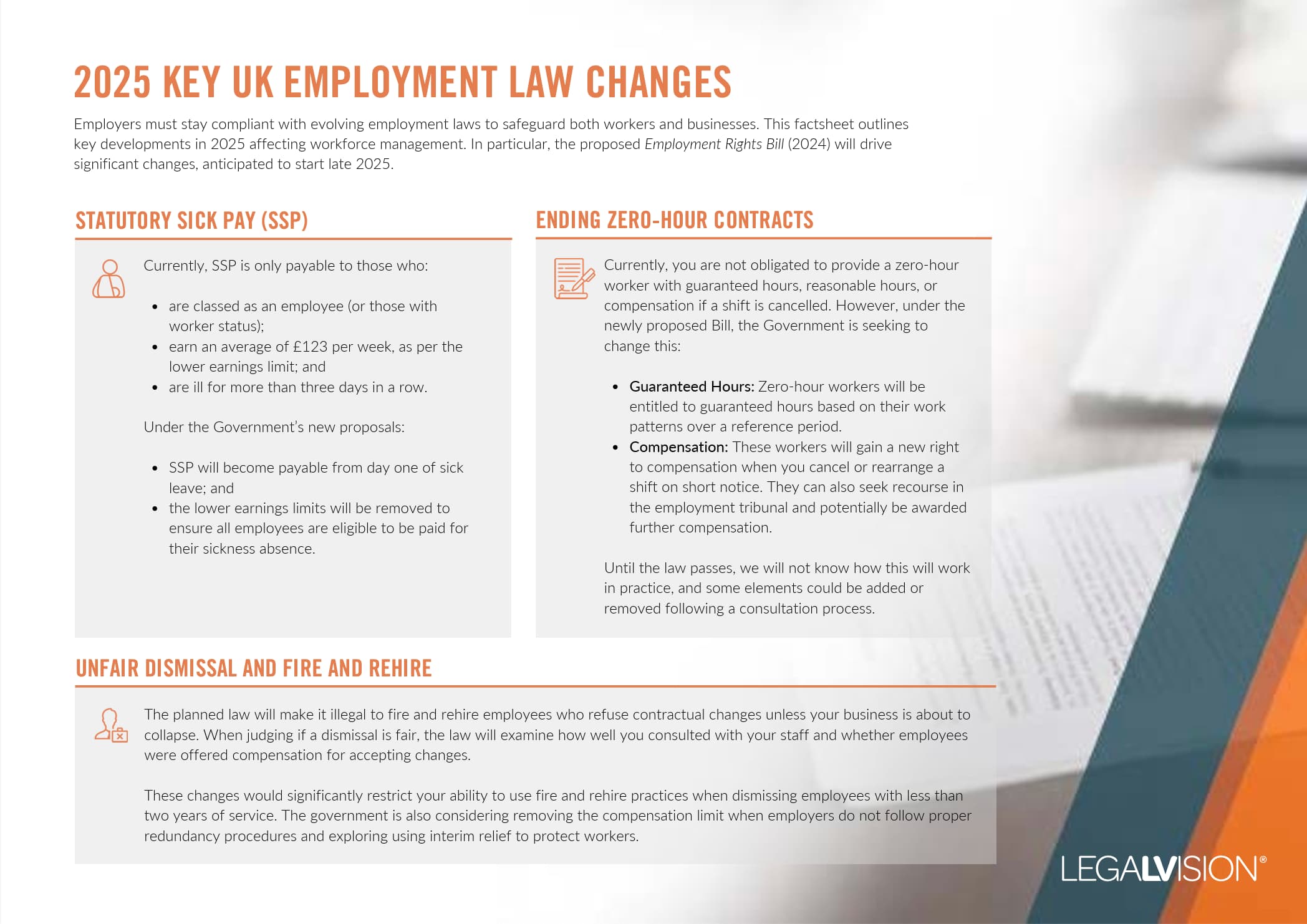
This factsheet outlines key developments in 2025 affecting workforce management.
Call 0808 196 8584 for urgent assistance.
Otherwise, complete this form, and we will contact you on the same business day.
Business Transfer Criteria
TUPE applies if the business transfers and the transfer meets all the criteria below.
The criteria are:
- a change of employer;
- that the transfer includes the main assets, such as but not limited to, employees and the equipment of the business; and
- the business transfer does not change the business’s activity, or if it does, it remains similar.
However, if a business transfer only involves the transfer of shares or equipment, TUPE usually will not apply.
“The mistake I see most often is treating TUPE as a paperwork exercise that starts once the deal is agreed. By then you have usually run out of time to consult properly, and the consultation failure costs more than the transfer itself. Start the employee side of the timeline the moment a transfer looks likely.”

Service Provision Change Criteria
When contracts are taken over, constituting a service provider change, there are three ways this can occur:
- outsourcing, so a contract from outside the business or organisation takes over a service the former used to carry out;
- insourcing, so a business or organisation starts carrying out a service previously done through an outside contract; or
- retendering, which is when a contract between a business and another ends and a new contractor takes over that service.
Regardless of which service provider change occurs, TUPE applies but only where there is an ‘organised grouping of employees’ unless the contract in question is:
- only the supply of goods, such as a fashion brand getting its material from a different; provider; or
- for a one-off event or a short-term task, such as a conference.
An organised grouping of employees means those carrying out the work for the organisation or business receiving the services. You may hear people refer to the latter as the client.
How Does TUPE Protect My Employees?
TUPE protects your employees in various ways. For example, protection within TUPE includes:
- an employee being able to transfer on their current terms and conditions;
- any liabilities from the old employer, such as unpaid wages, becoming the liability of the new employment;
- the employee keeps their continuous service gained from the old employer; and
- protection from dismissal, meaning it will be an unfair dismissal in specific circumstances.
Your Consultation And Information Duties Under TUPE
You must inform affected employees about a transfer, even where you plan no changes to their roles. Where you do plan measures, such as a new reporting line or a different pay date, you must also consult.
Since 1 July 2024, smaller employers can consult employees directly. You can take that route where your business employs fewer than 50 people, or where fewer than 10 employees transfer. One condition applies. You cannot already recognise a trade union or have elected employee representatives in place.
You also owe the new employer written employee liability information at least 28 days before the transfer date. That information covers names, ages, written statements of employment particulars, disciplinary and grievance records from the past two years, and any likely claims.
An employment tribunal can award up to 13 weeks’ uncapped gross pay for each affected employee where an employer fails to inform and consult. A new employer who receives late or inaccurate liability information can claim at least £500 per employee. Plan the timeline backwards from the transfer date, and keep a written record of informing and consulting your employees.
Key Takeaways
If your business is part of a business transfer or service provider change, The Transfer of Undertakings (Protection of Employment) Regulations (TUPE) will likely apply. This is legal protection for the employees affected by these changes in a business or organisation. A business transfer is where part of or all of a business transfers to another one or two merge into a new one. A service provider change is where a business or organisation changes who provides a specific service it receives.
You must comply with TUPE in both circumstances, provided the business transfer or service provider change meets the relevant criteria. TUPE protects your employees in various ways, such as automatically transferring their existing terms and conditions when they transfer.
If you need help understanding the meaning of TUPE and the legal implications for employers and employees, our experienced employment solicitors can assist as part of our LegalVision membership. For a low monthly fee, you will have unlimited access to lawyers to answer your questions and draft and review your documents. So call us today on 0808 196 8584 or visit our membership page.
Frequently Asked Questions
What does TUPE mean?
TUPE stands for the Transfer of Undertakings (Protection of Employment) Regulations. TUPE protects employees when a business or part of a business transfers to a new owner, or when a service moves to a new provider. Employees keep their existing terms and their continuous service.
What is a business transfer?
A business transfer happens where all or part of an organisation moves to another company, or where two companies merge into a new one. TUPE applies where the employer changes, the main assets move across, and the business activity stays the same or similar.
Do I have to consult employees before a TUPE transfer?
Yes. Both the outgoing and incoming employers must inform affected employees or their representatives about the transfer. You must also consult where you plan measures that affect them, such as changes to reporting lines, location or pay arrangements.
Can I change employee contracts after a TUPE transfer?
Rarely. Employees transfer on their existing terms, and TUPE restricts changes connected to the transfer. Where a buyer wants different terms or fewer staff, they usually negotiate with the affected employees, often through a settlement agreement with redundancy compensation.
We appreciate your feedback! Request your free consultation now.


