


Summary
- Employers must provide workers with a minimum 20-minute uninterrupted rest break if they work more than six hours, and this break should be taken away from the workstation.
- If a worker takes longer than their entitled break, employers should first address this informally, escalating to formal disciplinary action only if the behaviour continues.
- Clear written policies on rest breaks, set out in employment contracts and staff handbooks, are the most effective way to prevent and manage disputes.
- This is a plain-English guide to rest break entitlements and managing extended breaks in the workplace, written for business owners operating in the United Kingdom.
- The article was produced by LegalVision, a commercial law firm that specialises in advising clients on employment law matters.
Tips for Businesses
Set out rest break entitlements clearly in employment contracts and staff handbooks. Address breaches informally before escalating to disciplinary procedures. Ensure any disciplinary process follows your internal policy. Review break policies regularly and encourage open communication to resolve underlying issues, such as workload pressures, before they become formal disputes.


As an employer, the law requires you to allow your workers to take rest breaks while working for you. This applies to their working time during their shift and between each working day. Rest breaks during the day when your workers are working for you are essential. They enable your workers to stay fresh and maintain their energy, allowing them to work productively. However, you may find that your workers decide to take longer breaks than they are allowed to by law or under their contract with you. This can harm your team by disrupting work and causing others to copy the behaviour of taking longer breaks. Therefore, it is essential to be aware of the rules regarding rest breaks.
This article will explain what you, as an employer, should do when a worker takes a longer rest break than they are allowed.
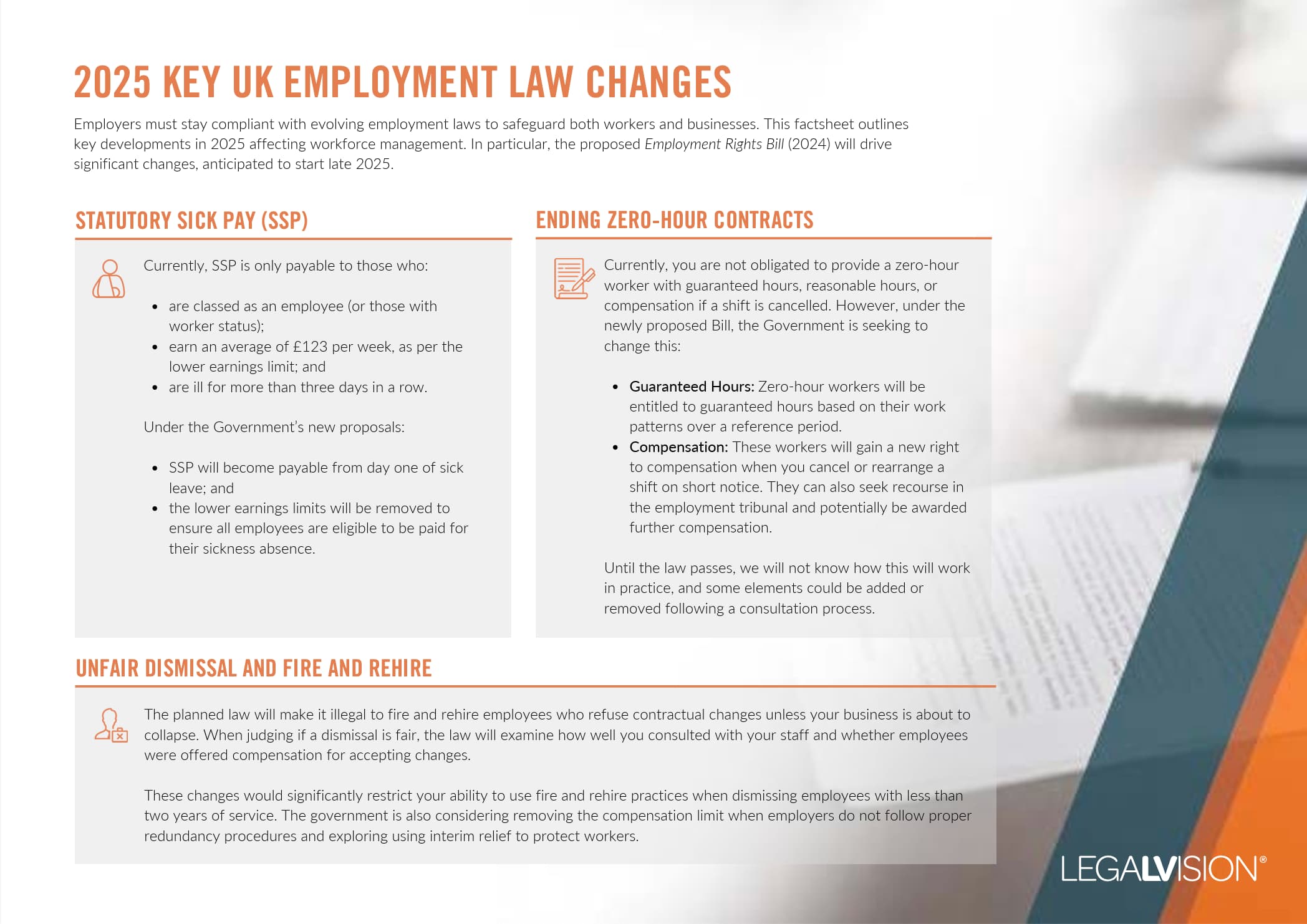
This factsheet outlines key developments in 2025 affecting workforce management.
What are the Rules on Rest Breaks at Work?
When your employee is working, you must give them the rest breaks required by law. Workers who are over 18 years old are typically entitled to three different types of breaks, including rest breaks during their workday.
The rest breaks apply whether they work in the workplace or work from home. Where your workers work at least six hours for you, you must allow them a rest break of at least 20 minutes, and you can tell them when they must take this rest break.
This rest break should be:
- uninterrupted;
- taken in one go;
- taken away from the employee’s workstation; and
- should be taken during their working day, ideally in the middle of it rather than at the end.
You are not legally required to:
- pay your workers when they take a rest break unless you agree to do so in their employment contract;
- offer your workers more than a 20-minute break during the six hours them work for you; and
- provide a lunch break in addition to the rest break.
Instead, your workers’ legal rest break of 20 minutes when working for more than six hours could be their lunch break. If you wish to provide more or longer rest breaks, you may detail this in your worker’s employment contract.
How to Avoid Workers Taking Longer Rest Breaks
Occasionally, as an employer, you may deal with a worker taking longer rest breaks throughout the day. To avoid this situation, you must be clear regarding break entitlements. This should be in your contract of employment and workplace policies which may be located in your employees’ handbook and should be easily accessible.
Furthermore, you should ensure that your employees are aware of them. Once your employees know the rules on rest breaks, they are less likely to break them. Additionally, you may decide that there are instances where an employee can take a more extended rest break than expected. Your policies may state these reasons and the process for making such a request.
Continue reading this article below the formCall 0808 196 8584 for urgent assistance.
Otherwise, complete this form, and we will contact you on the same business day.
Taking a Longer Rest Break Than Allowed
If your workers take longer than allowed for their rest breaks, there are certain actions you may wish to take. Your workplace rules should state that this behaviour is not permitted, and you may term it as absent without permission. Breaking workplace rules may constitute misconduct.
If your employee is taking a longer rest break than allowed, you may want to discuss it informally with them initially. You may wish to consider their perspective and explore a way to resolve the issue. This action is particularly suitable where your employee has perhaps only been late returning from their rest break a couple of times. When discussing this, you can let them know how taking an unauthorised break may impact productivity and other team members.
As with all instances requiring disciplinary action, you must follow a fair procedure that should be in line with your internal policy and the Acas code on disciplinary and grievance procedures. If you decide you need to take disciplinary action, you should:
- alert your employee to this immediately in writing, stating that you are doing so due to them taking a longer rest break than allowed. You should also state the potential consequences of their conduct;
- carry out a full investigation into the issue of taking longer lunch breaks;
- hold a disciplinary meeting soon after the investigation, allowing the employee reasonable time to prepare and explain their behaviour. Inform the employee of their right to be accompanied by a colleague or trade union representative;
- decide on the disciplinary outcome, for example, no action needed, an informal warning or a written warning; and
- ensure you give your worker a right of appeal.
Other Key Considerations
Dealing with extended rest breaks is essential, but fostering a positive work environment that encourages policy compliance is crucial. Here are some additional strategies to consider:
- Lead by example: Managers and supervisors should adhere to the break policy, demonstrating its importance to all workers.
- Educate employees: Regularly remind workers about the importance of adhering to break schedules, not just for policy compliance but for their own well-being and productivity.
- Monitor patterns: Keep track of break patterns to identify if there are certain times of day, or particular teams that are more prone to extended breaks. This can help address underlying issues.
- Flexible solutions: Consider implementing flexible break options that allow employees to choose when they take their breaks within certain parameters, thereby increasing compliance and satisfaction.
- Address workload issues: Sometimes, employees may take longer breaks due to stress or overwhelming workloads. Regularly assess and adjust workloads as needed.
- Use technology: Time-tracking software can help monitor break times more accurately and fairly, reducing disputes and misunderstandings.
- Regular policy reviews: Periodically review and update your break policies to ensure they remain relevant and are effective for your evolving workplace.
- Open communication: Encourage employees to discuss any issues they have with the current break system, fostering a culture of open dialogue and continuous improvement.
By implementing these strategies alongside clear policies and fair enforcement, you can create a more harmonious workplace where break time rules are respected and adhered to willingly.
Key Takeaways
As an employer, you must provide mandatory rest breaks of at least 20 minutes for shifts over six hours. Be aware of rules, such as taking breaks in the middle of the shift, away from the workstation. However, you may face problems where staff take longer than allowed for their rest break. Understand the actions you can take, such as informally discussing the issue with the employee. In serious or repeated cases, follow your disciplinary and grievance procedure.
LegalVision provides ongoing legal support for businesses through our fixed-fee legal membership. Our experienced employment lawyers help businesses manage contracts, employment law, disputes, intellectual property, and more, with unlimited access to specialist lawyers for a fixed monthly fee. To learn more about LegalVision’s legal membership, call 0808 196 8584 or visit our membership page.
Frequently Asked Questions
Must I give my staff a rest break during their working day?
As an employer, you must give your staff rest breaks from their job. You must give employees a 20-minute uninterrupted break away from their workstation if they work more than six hours.
Can I take disciplinary action against my staff for taking too long on their rest break?
If staff take longer than their entitled rest break, you may take disciplinary action. However, this would typically be appropriate where they have done so repeatedly and where informal action has not worked.
Can I require my employees to remain on-call during their rest breaks?
Generally, no. Rest breaks should be uninterrupted and away from the employee’s workstation. Requiring employees to stay on-call during breaks may invalidate them as proper rest breaks under UK law. If continuous coverage is needed, implement staggered breaks to ensure employees remain available while taking proper rest breaks.
Do part-time workers have the same rest break entitlements as full-time workers?
Part-time workers are entitled to the same rest break provisions as full-time workers. If a part-time employee works more than 6 hours in a day, they are entitled to a 20-minute uninterrupted break, just as a full-time worker is.
We appreciate your feedback! Request your free consultation now.


