


Summary
- Pay secrecy clauses in employment contracts are lawful in the UK, but the Equality Act 2010 limits their enforceability where employees discuss pay to identify potential discrimination linked to protected characteristics such as gender, race, or disability.
- Employers with 250 or more employees must report annually on their gender pay gap, meaning pay secrecy clauses must not conflict with broader pay transparency obligations.
- Overly broad pay secrecy clauses risk legal challenge, reputational damage, and reduced employee trust, so any such clause must be carefully drafted to permit lawful pay disclosures.
- This article is a plain-English guide to pay secrecy clauses in UK employment contracts, written for business owners and employers by LegalVision, a commercial law firm.
- LegalVision specialises in advising clients on employment law matters, including the drafting and review of employment contracts.
Tips for Businesses
Audit pay structures regularly to identify disparities before disputes arise. Remove or redraft overly broad secrecy clauses that may breach the Equality Act 2010. Establish clear pay bands and grievance processes, and train managers on lawful pay communication to reduce legal risk and support a fair workplace culture.


Pay secrecy is a contractual mechanism that restricts employees from disclosing their remuneration under Australian workplace law. Governed by the Fair Work Act 2009 (Cth) and amended by the Secure Jobs, Better Pay Act 2022 (Cth), employees now hold a protected right to disclose or discuss their pay if they choose to, rendering clauses that prohibit this unenforceable. The Fair Work Ombudsman oversees compliance, and employers who act adversely against an employee for exercising this right risk breaching general protections provisions. This article will explain what pay secrecy clauses are and how your business may utilise them.
Legal Considerations
Under the Equality Act 2010, you cannot enforce pay secrecy clauses if an employee discusses their pay to determine whether it is connected with a protected characteristic. Protected characteristics include an employee’s:
- gender;
- race; or
- disability.
This allows employees to explore potential pay discrimination issues through open discussions with their colleagues.
If an employee can successfully prove that they are trying to identify a potential issue of unequal pay as a result of protected characteristics, you will be unable to enforce pay secrecy terms. As an employer, it is crucial to understand that your workforce may not welcome such pay secrecy clauses, which may create additional enforcement difficulties.
Protecting Your Business Interests
While relevant legislation limits the scope of pay secrecy clauses, you can still include clauses in your employment contracts that prevent employees from disclosing confidential information, such as trade secrets or sensitive financial information. This may extend to details of their pay and benefits package.
However, in doing so, you must strike an appropriate balance. Any pay secrecy clauses included in employment contracts must not be so broad or restrictive that they prevent your employees from making relevant pay disclosures, such as to:
- explore potential discrimination issues; or
- seek professional advice regarding their salary.
Call 0808 196 8584 for urgent assistance.
Otherwise, complete this form, and we will contact you on the same business day.
Pay Transparency Obligations
The UK Government has taken steps to promote pay transparency and address issues related to pay discrimination. For example, employers with 250 or more employees must report annually on their gender pay gap. This highlights the importance of ensuring any pay secrecy clauses do not conflict with other legal obligations.
Disadvantages of Pay Secrecy Clauses
1. Workplace Inequality
Pay secrecy can cause both actual and perceived inequality within your organisation. Actual inequality can arise when pay secrecy clauses are used to differentiate pay between employees without their knowledge unfairly. Perceived inequality can arise when pay secrecy clauses are included in employment contracts, causing employees to assume pay inequality exists.
As a business owner, both actual and perceived inequality can harm your business’s standards and reputation. Your employees reasonably expect to be paid the same as coworkers who engage in the same work. Pay secrecy can often be associated with extending gender and racial pay gaps and enabling workplace favouritism.
2. Decreased Motivation
If your employees believe that pay secrecy amounts to unequal pay, it can negatively impact their motivation and job satisfaction. Employee motivation stems from rewards for efforts. If employees put in significant effort but are unsure if their pay equals that of their coworkers, their efforts may decrease. Employees tend to compare their efforts and outcomes to those of their coworkers, which encourages motivation.
3. Negative Impacts on Employee Culture
Most employees want to be recognised and appreciated by your business. This appreciation is often symbolised through pay, incentives, and bonuses. When you keep pay secret, especially incentives or bonuses, employees’ perception of your respect and appreciation for them becomes unclear. Withholding pay information often leads employees to question the motive behind the secrecy clause. They may start second-guessing the reasons behind the clause, decreasing trust and loyalty in you as their employer.
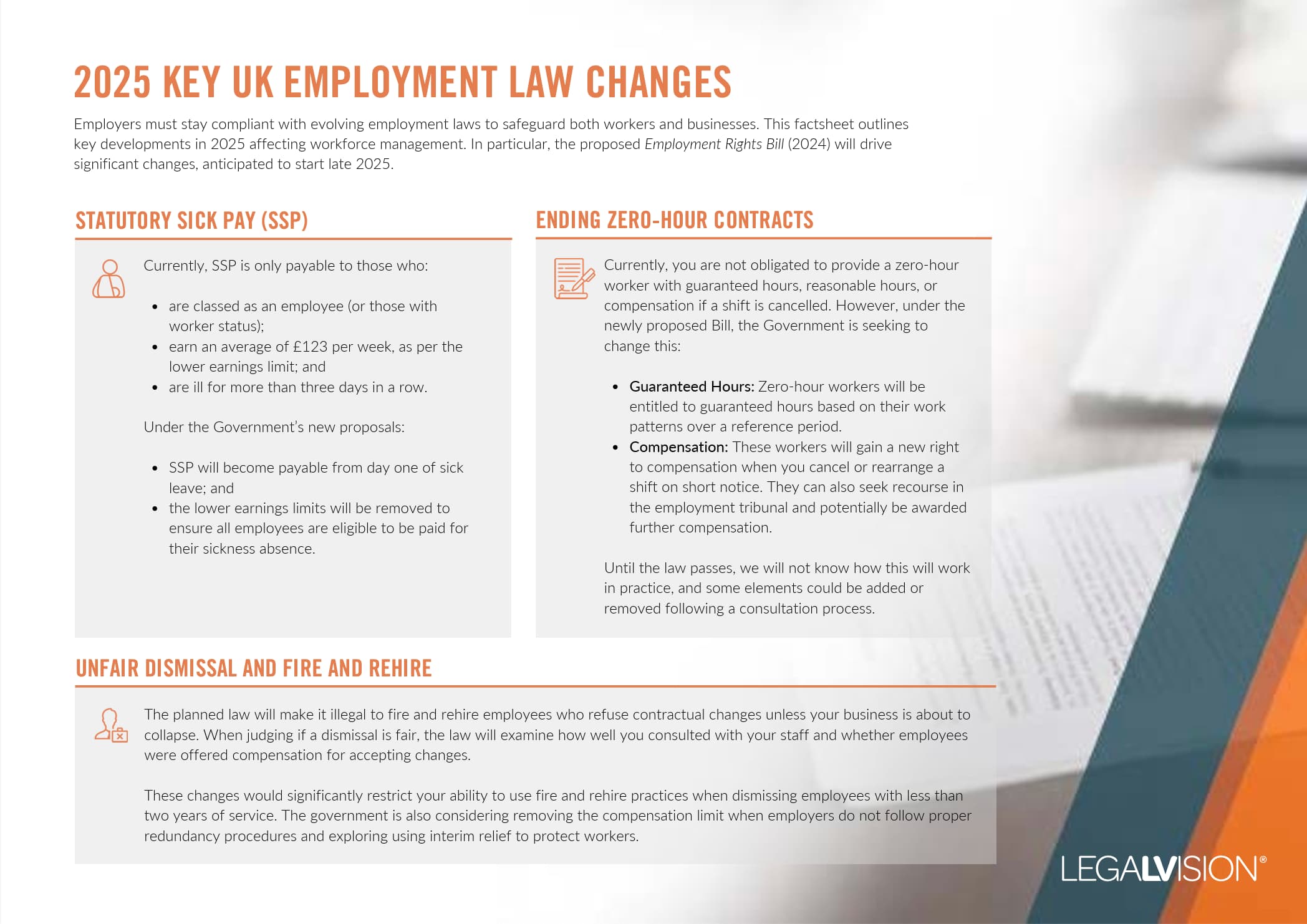
This factsheet outlines key developments in 2025 affecting workforce management.
Potential Advantages of Pay Secrecy
Pay secrecy has some potential advantages, though only a few employers opt to include these clauses due to the stigma that surrounds them.
1. Organisational Control and Less Conflict
Many companies include pay secrecy clauses to increase organisational control and limit conflict. They argue that if employees do not know that they are paid less than their coworkers, there is a limited chance of conflict.
Pay differences often cause conflict and awkwardness among employees. Pay secrecy bypasses this by keeping pay information private.
2. Employee Privacy Protection
Pay secrecy clauses can help protect your employees’ privacy by keeping their pay personal and private. While privacy may be necessary to some, pay transparency may trump this value for others. Therefore, it is important to consider your employees’ preferences when implementing these clauses.
3. Salary Negotiation Advantage
Pay secrecy strengthens your position in negotiating employees’ salaries and working conditions, giving you greater bargaining power. This could mean two employees doing the same job receive different pay based solely on their negotiating skills, contributing to pay inequality.
While increased bargaining power may seem advantageous, it is essential to consider the long-term negative consequences of pay secrecy on your workplace culture.
Practical Tips
To navigate the complex issue of pay secrecy while handling legal risks and fostering a positive workplace culture, you should:
- conduct regular pay audits across roles, departments, genders and so on to identify and address any pay disparities before legal issues arise;
- implement clear, well-defined, and transparent pay structures, bands, promotion criteria, and raise cycles;
- train managers on appropriate pay communication, the risks of secrecy clauses, and your company’s pay transparency policies;
- foster a culture where employees feel comfortable discussing pay and raising inequity concerns to address issues proactively;
- review and remove any overly broad ‘pay secrecy’ clauses from contracts that could violate legislation; and
- establish grievance mechanisms for employees to escalate pay discrimination concerns without retaliation fears.
Additionally, when hiring new workers, you should openly communicate your business’ pay philosophies, ranges, and policies during onboarding. This will help you build trust and transparency with your employees from the onset.
Key Takeaways
As an employer, while you can include pay secrecy clauses in employment contracts, you must carefully consider the potential drawbacks. Such clauses can lead to perceived pay inequality, erode employee motivation and trust, and create an unhealthy workplace culture. Pay transparency obligations and anti-discrimination laws place essential limitations on enforcing these clauses. Ultimately, you should weigh the relatively minor advantages of pay secrecy, such as organisational control and negotiating leverage, against the significant risks of legal issues, reputational damage, and lower employee engagement. Fostering an environment of pay transparency and open communication better serves your business interests in the long run.
LegalVision provides ongoing legal support for businesses through our fixed-fee legal membership. Our experienced employment lawyers help businesses manage contracts, employment law, disputes, intellectual property, and more, with unlimited access to specialist lawyers for a fixed monthly fee. To learn more about LegalVision’s legal membership, call 0808 196 8584 or visit our membership page.
Frequently Asked Questions
Can employees discuss their pay despite a secrecy clause?
Yes. Employees can disclose their pay to identify potential discrimination linked to protected characteristics like gender, race, or disability under the Equality Act 2010.
Do pay secrecy clauses apply to bonuses?
No. Overly broad clauses covering bonuses and incentives can erode employee trust and may conflict with anti-discrimination legislation.
Must employers report pay gaps publicly?
Yes. Employers with 250 or more employees must annually report their gender pay gap to comply with UK pay transparency obligations.
Can employers still protect confidential pay information?
Yes. Employers can include confidentiality clauses covering sensitive financial information, provided they do not prevent employees from making lawful pay disclosures.
We appreciate your feedback! Request your free consultation now.


