


In Short
- Setting up a hair salon in the UK involves legal duties across business structure, premises, health and safety, employment and data protection.
- You must comply with UK regulations on COSHH, employment law, consumer rights and data protection.
- Failure to meet these obligations can lead to fines, legal action or business closure.
Tips for Businesses
Choose your business structure carefully and register correctly with HMRC and Companies House if required. Check lease terms before signing premises, carry out health and safety risk assessments, and register any regulated treatments with your local council. Put proper employment contracts, privacy notices and client terms in place early to reduce legal risk.
Summary
This article is a practical guide for UK business owners on the legal requirements for setting up and running a hair salon in the United Kingdom. It explains key compliance areas, including licensing, employment, health and safety, data protection and consumer law, prepared by LegalVision’s business lawyers, who specialise in advising clients on commercial and regulatory compliance.


Starting your own hair salon is an exciting venture that allows you to turn your passion for hairstyling into a thriving business. However, many aspiring salon owners focus solely on the creative aspects while overlooking the crucial legal requirements that come with running a salon. Failing to comply with UK health and safety regulations, employment law, and planning or licensing obligations can result in fines, legal action, and even closure. This article outlines the key legal considerations you need to address when setting up a hair salon in the UK.
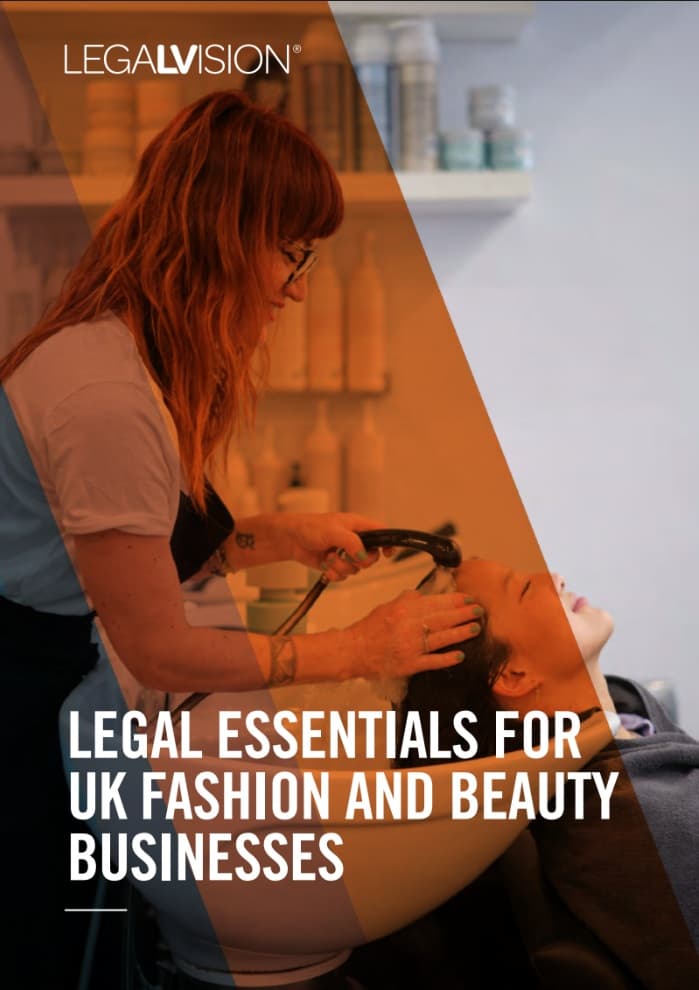
Starting or growing a UK fashion or beauty business? Download this free guide for essential legal insights on branding, data protection, hiring, contracts and staying compliant.
Business Structure and Registration
Before trading, you must decide on the appropriate legal structure for your hair salon. The most common options are:
- sole trader;
- partnership; and
- limited company.
Each structure affects taxation, liability and administrative responsibilities. A limited company helps protect your personal assets if the business encounters financial difficulties, whereas sole traders benefit from simpler administration but have unlimited personal liability.
Premises and Leasing Considerations
Securing suitable premises is essential to your salon’s success. Before signing a commercial lease, you should carefully review:
- permitted use clauses;
- rent review provisions;
- repair and maintenance obligations; and
- restrictions on making alterations.
Call 0808 196 8584 for urgent assistance.
Otherwise, complete this form, and we will contact you on the same business day.
Health and Safety Compliance
Health and safety regulations are particularly important in the hairdressing industry due to the use of chemicals and electrical equipment. Employers must comply with the Health and Safety at Work Act 1974, which requires them to protect the health, safety, and welfare of employees and clients.
Key duties include:
- conducting thorough risk assessments of treatments and equipment;
- ensuring safe storage and handling of chemicals;
- providing adequate ventilation;
- ensuring electrical equipment is safe and properly maintained, regular PAT testing is not legally required, but is widely used to demonstrate compliance; and
- training staff on safe working practices.
Registration and Licensing Requirements
Your business will be liable for business rates, and you should notify your local council when you take occupation so they can issue the correct bill.
However, if you offer special treatments, such as:
- ear piercing;
- electrolysis;
- semi-permanent skin colouring; and
- tattooing,
You may need to register the activities with your local authority if it has adopted the relevant provisions of the Local Government (Miscellaneous Provisions) Act 1982. Requirements vary by council, so contact your local environmental health department early.
Moreover, you must also comply with the Control of Substances Hazardous to Health (COSHH) Regulations 2002, which require proper:
- handling;
- storage; and
- disposal of chemicals used in salon treatments.
Employment Law Obligations
If you hire stylists or support staff, you take on several legal responsibilities as an employer. These include:
- providing a written statement of main employment particulars on or before the employee’s first day;
- registering as an employer with HMRC and operating the PAYE system;
- complying with National Minimum Wage and National Living Wage legislation;
- providing at least 5.6 weeks of paid holiday per year;
- offering Statutory Sick Pay (if eligible);
- enrolling eligible staff in a workplace pension scheme in line with auto-enrolment rules; and
- protecting employees from discrimination and unfair dismissal.
Implementing clear policies on the following:
- working hours;
- breaks;
- disciplinary procedures; and
- health and safety will help protect your business.
Data Protection and Client Records
Hair salons collect significant amounts of personal data, making compliance with the UK GDPR and Data Protection Act 2018 essential.
Key obligations include:
- ensuring a lawful basis for processing client data, usually contractual necessity or legitimate interests;
- storing data securely, whether electronically or on paper;
- implementing technical and organisational measures to prevent unauthorised access;
- providing a clear privacy notice explaining how client data will be used;
- retaining data only for as long as necessary; and
- reporting any data breach that poses a risk to individual rights to the Information Commissioner’s Office (ICO) within 72 hours.
Consumer Protection and Terms of Service
You must comply with consumer protection laws when dealing with clients. The Consumer Rights Act 2015 requires that services are:
- performed with reasonable care and skill;
- provided within a reasonable time; and
- charged at a reasonable price if not agreed in advance.
To protect your business and promote transparency, you should create clear terms and conditions, covering:
- pricing;
- cancellation and refund policies; and
- complaints procedures.
These terms must be fair and easily accessible.
Key Takeaways
Setting up a hair salon involves more than creative talent. As such, you must comply with a range of legal obligations. This includes ensuring:
- your business structure is properly registered;
- your premises meet planning and lease requirements;
- you comply with health and safety laws and COSHH;
- employment law is followed from your first hire;
- client data is protected under UK GDPR; and
- your consumer terms are clear and legally compliant.
LegalVision provides ongoing legal support for hair salons through our fixed-fee legal membership. Our experienced lawyers help hair salons manage contracts, employment law, disputes, intellectual property and more, with unlimited access to specialist lawyers for a fixed monthly fee. To learn more about LegalVision’s legal membership, call 0808 196 8584 or visit our membership page.
Frequently Asked Questions
Do I need a licence to open a hair salon in the UK?
No. Standard hairdressing services such as cutting, colouring, and styling do not require a licence in England and Wales. However, if you provide services such as ear piercing, electrolysis, or semi-permanent skin colouring, you may need to register these activities with your local council. This depends on whether your council has adopted the relevant legislation.
What are my legal obligations when hiring employees for my hair salon?
You must provide a written statement of employment particulars on or before their first day, register as an employer with HMRC and operate PAYE and pay at least the National Minimum Wage or National Living Wage. Moreover, you need to provide 5.6 weeks’ paid holiday per year, enrol eligible staff into a workplace pension scheme, comply with discrimination and unfair dismissal laws and hold employer’s liability insurance.
We appreciate your feedback! Request your free consultation now.


